Following on from World Polio Day this story by Dave King was published in Rotary Magazine in October 2026
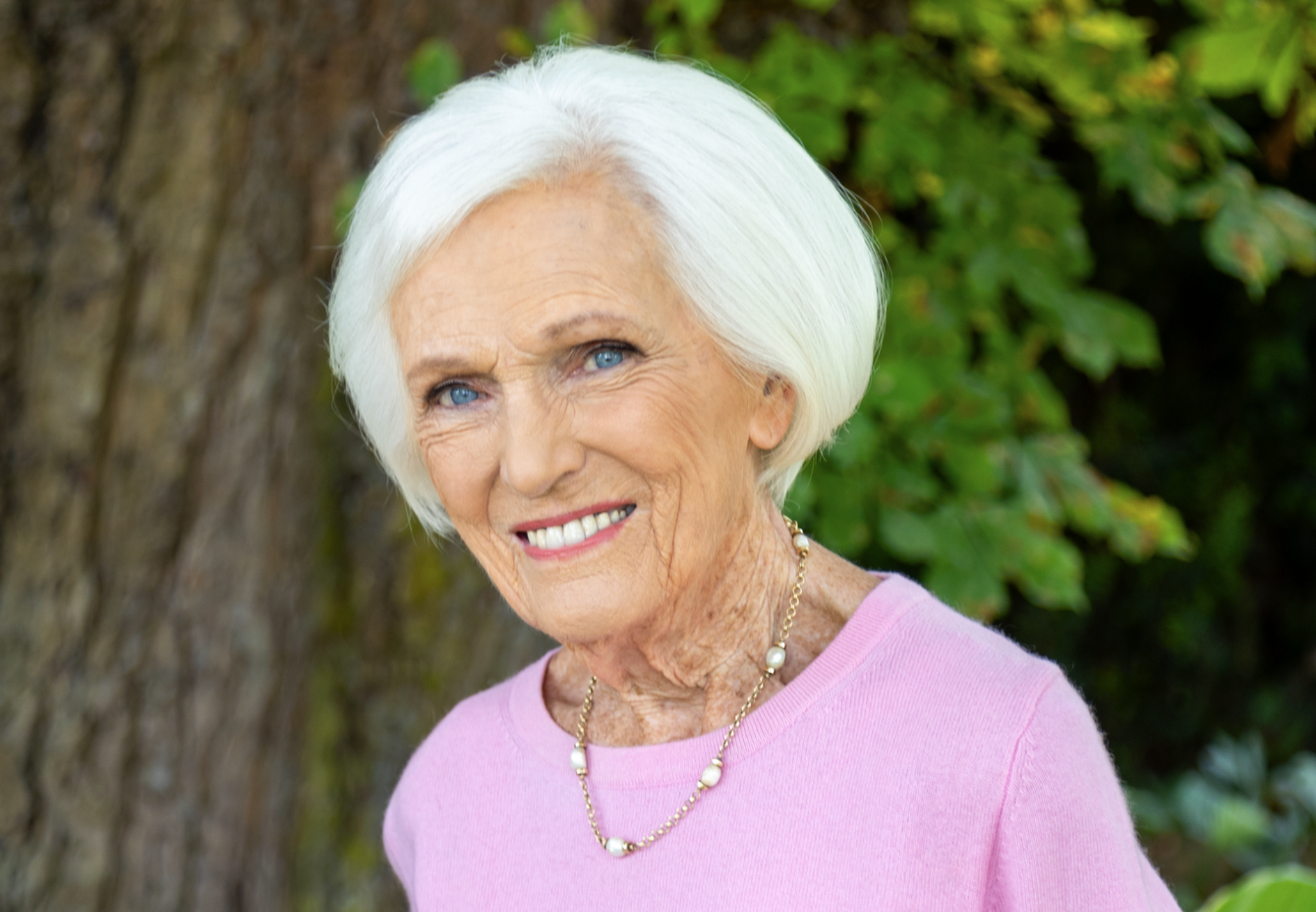
For generations, Dame Mary Berry has been the Queen of Cakes who has inspired millions. But behind that remarkable career is a childhood
encounter with polio which changed her life. As Rotary marked World Polio Day on October 24, Dave King caught up with the former Great British Bake Off judge to discuss contracting the disease as a young teenager, the lasting effects of polio and why she remains a passionate supporter of vaccination.
At 91, Dame Mary Berry has few thoughts of slowing down. There is another cookbook, ‘Mary All in One’, arriving in October, a BBC television special at Christmas and, inevitably, plenty happening in the kitchen.
“Life is wonderful!” she admits. “I like to keep busy and work is fun. Cooking and baking are the skills that I enjoy. I am always searching for new ideas. They have to be easy to make and foolproof to cook.”
It is a philosophy which has served Mary well during more than seven decades working with food.
She has become one of Britain's best-known cookery writers and broadcasters, although for millions she will forever be associated with ‘The Great British Bake Off’, where she spent seven years alongside Paul Hollywood, Mel Giedroyc and Sue Perkins.
“I loved every moment,” she recalls. “Paul, Mel and Sue, we were a great team and supported each other with humour. I was with Mel and Sue a few weeks ago, which is always such fun, and I congratulated Paul on his recent MBE.”
Ask Mary what gives her the greatest satisfaction after such an extraordinary career and the answer is characteristically straightforward. “Encouraging people to cook and enjoy – that is my reward.”
But long before the television studios, cookbooks and celebrity, Mary Berry was a schoolgirl growing up in Bath whose life was abruptly interrupted by polio.
There was no vaccine to protect children from a disease which could attack the nervous system, causing paralysis and, in the most serious cases, death.
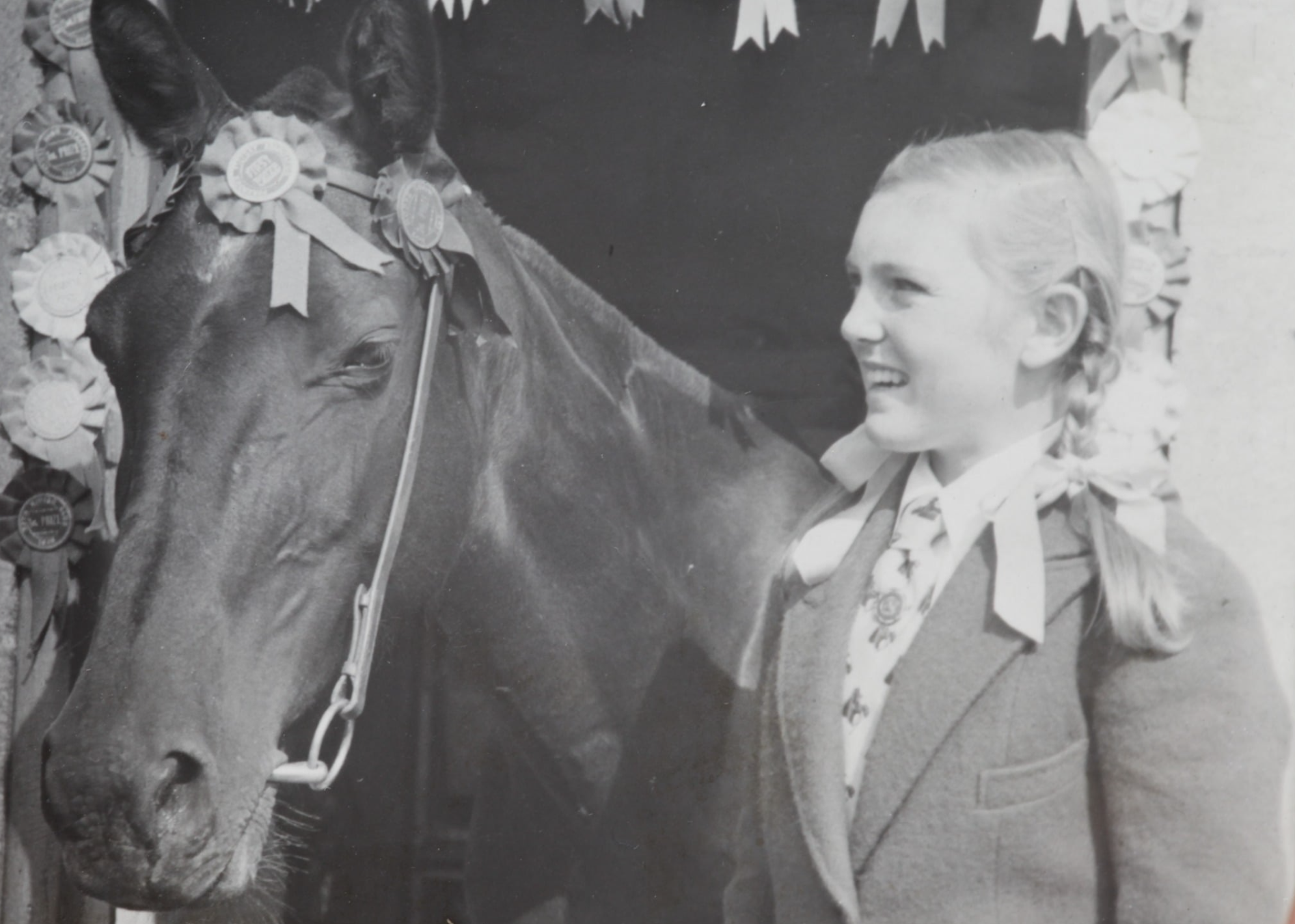
Until then, Mary's childhood had been wonderfully uncomplicated. “I had a very happy childhood with my two brothers growing up in Bath,” she recalls. “I loved the great outdoors and spent a lot of time riding my pony until I was 13.
“At that stage I really didn't have ambition for the future. I was just happy.”
Then she fell sick. “I remember feeling very ill, thinking I had flu,” says Mary. “I was in bed and my mother had lit the fire in the bedroom, which was only lit on rare occasions.”
The family doctor, Dr Love, came to see her. “I remember him saying: ‘I think Mary needs to go to the isolation hospital as we need to find out more’.
“I think my family was told that I had polio, but I only found out about my illness when I asked the nurse to read the chart at the bottom of my bed. “She said ‘infantile paralysis’, and I had no idea what that was.”
Mary was taken to the isolation hospital at Claverton Down in Bath. She has never discovered how she contracted the poliovirus. There were other cases in the community and one of her younger brothers also contracted a very mild form of the disease.
Mary's illness was much more serious. She was placed in isolation, physically separated from her family while doctors assessed the extent of the infection.
“I remember being in a single room with a glass partition and my parents were the other side of the glass when they came to visit me. I couldn't lift my head. I had liquid through a cup with a spout, but I could use my arms.”
From the isolation hospital, Mary was transferred to the Bath & Wessex Orthopaedic Hospital, where her treatment and rehabilitation continued. Some of her memories of that period remain remarkably vivid more than three-quarters of a century later.
“I remember being cold in the hospital as other patients had TB and they needed fresh air, so the folding doors to the outside terrace were open.
“We had a toothbrush in a mug of water and the toothbrush froze in the mug.”
She remembers the nurses and physiotherapists with affection. The formidable doctor, Miss Forrester-Brown, was another matter. “The kindness and treatment were fine. The nurses and physio were particularly nice. Miss Forrester-Brown was brief and everyone
was terrified of her!”
There is another memory which has never left her. In the hospital was a girl, a little younger than Mary, whose polio was so severe that she needed an iron lung – the mechanical respirator which became one of the defining images of the polio epidemics of the 20th century.
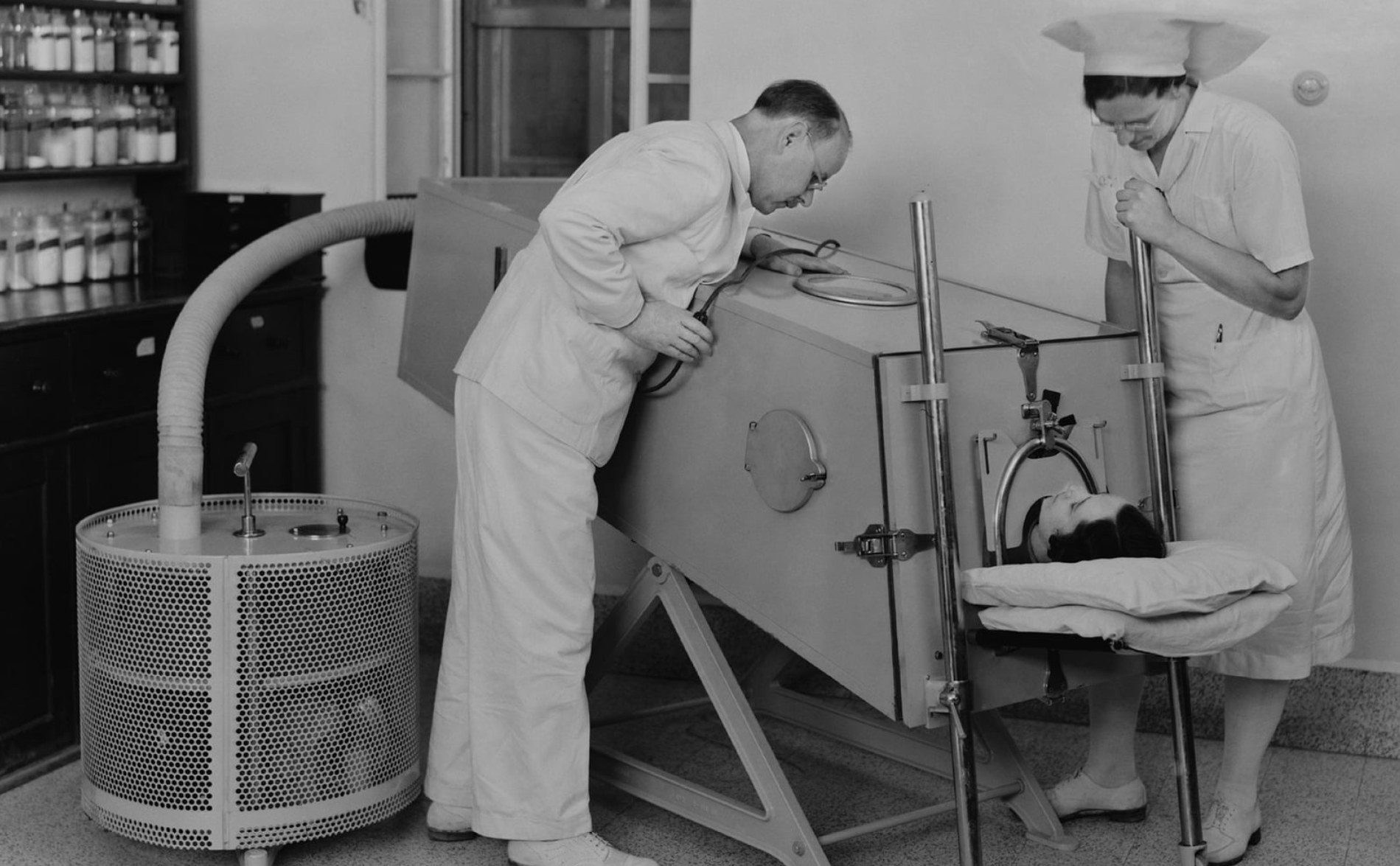
Library image showing an iron lung in operation in the 1940s
“There was one little girl about 11 or 12 called Buffy in an iron lung,” Mary recalls. “I can remember it making a repetitive noise and Buffy was very, very poorly and in fact died when I was there, which was very sad. I was exceedingly lucky to get well.”
Mary eventually returned home, but polio had left its mark. She had to keep her left arm raised in a support above her head, something she remembers principally because it was “very annoying”.
The permanent effects remain with her today. “I am left with a weaker left arm and a slightly deformed left hand and scoliosis of the spine,” she explains. “But again, I just got on with it and now have brittle bones, so I am extra careful.”
Mary’s left hand is occasionally noticed by television viewers who assume the problem is arthritis. “I had absolutely no difficulty with my polio hand during my career,” says Mary. “When I am on television I get emails and post suggesting how to cope with arthritis in my hand, which of course is polio.”
Does it affect her everyday life now? “No, I just crack on and have learnt how to use my hand. It doesn't really affect me and is just a good excuse not to mend socks!”
Mary's good fortune was not shared by everyone who contracted polio. The disease can cause paralysis and, for survivors, its effects could remain long after the original infection.
The British Polio Fellowship estimates that tens of thousands of polio survivors remain in the UK, some experiencing the late effects of the disease and post-polio syndrome decades later.
Mary's experience came before Britain's vaccination programme transformed the threat from polio.
But as she recovered and moved into adulthood, another part of her life was beginning to take shape. She trained in domestic science in her home city of Bath and went on to work for the Bath Electricity Board, demonstrating electric ovens and showing customers how to use an appliance which was still relatively new in many British homes.
However, cooking was becoming more than an interest. Mary wanted to train at Le Cordon Bleu in Paris, the celebrated culinary school founded in the French capital in 1895. She had to wait several years for the opportunity, eventually being sponsored by her employer to
study there.
When Mary returned to the school many years later, she recalled cramped premises in the Rue du Champ de Mars with little space and no windows. Madame Brassart, who ran the school, was strict, the students were expected to speak French and Mary even faced an oral examination in the language.
It was serious professional training for a young woman determined to make her way in food.
Did the lasting effects of polio make her question whether she could do it? “Nothing held me back,” Mary insists. “I had a very good training at Bath College of Domestic Science, Bath Technical College and Le Cordon Bleu in Paris.”
That training helped launch a career which would eventually encompass magazine journalism, scores of cookbooks and decades of broadcasting.
During the 1960s, Mary became cookery editor of ‘Housewife’ magazine and later ‘Ideal Home’. Television followed and, many years later, ‘The Great British Bake Off’ introduced her to another generation.
Mary does not define that remarkable career by what happened to her as a child. Instead, she repeatedly returns to how fortunate she considers herself to have been.
“Looking back, I feel immensely fortunate to have had such amazing hospital support and care,” she says. “Some weren't so lucky.”
Then came the development which would transform the lives of generations of children.
Britain began its polio vaccination programme in 1956. The disease which had once put children into isolation hospitals and left some dependent on iron lungs would eventually disappear from everyday life in this country.
“It was great news when a vaccine became available,” Mary points out. “Young people of today know nothing about polio because the vaccine was invented, which meant in Britain there was no more polio.
“I am a great supporter of vaccines that have been so well researched and prevent life- threatening diseases.”
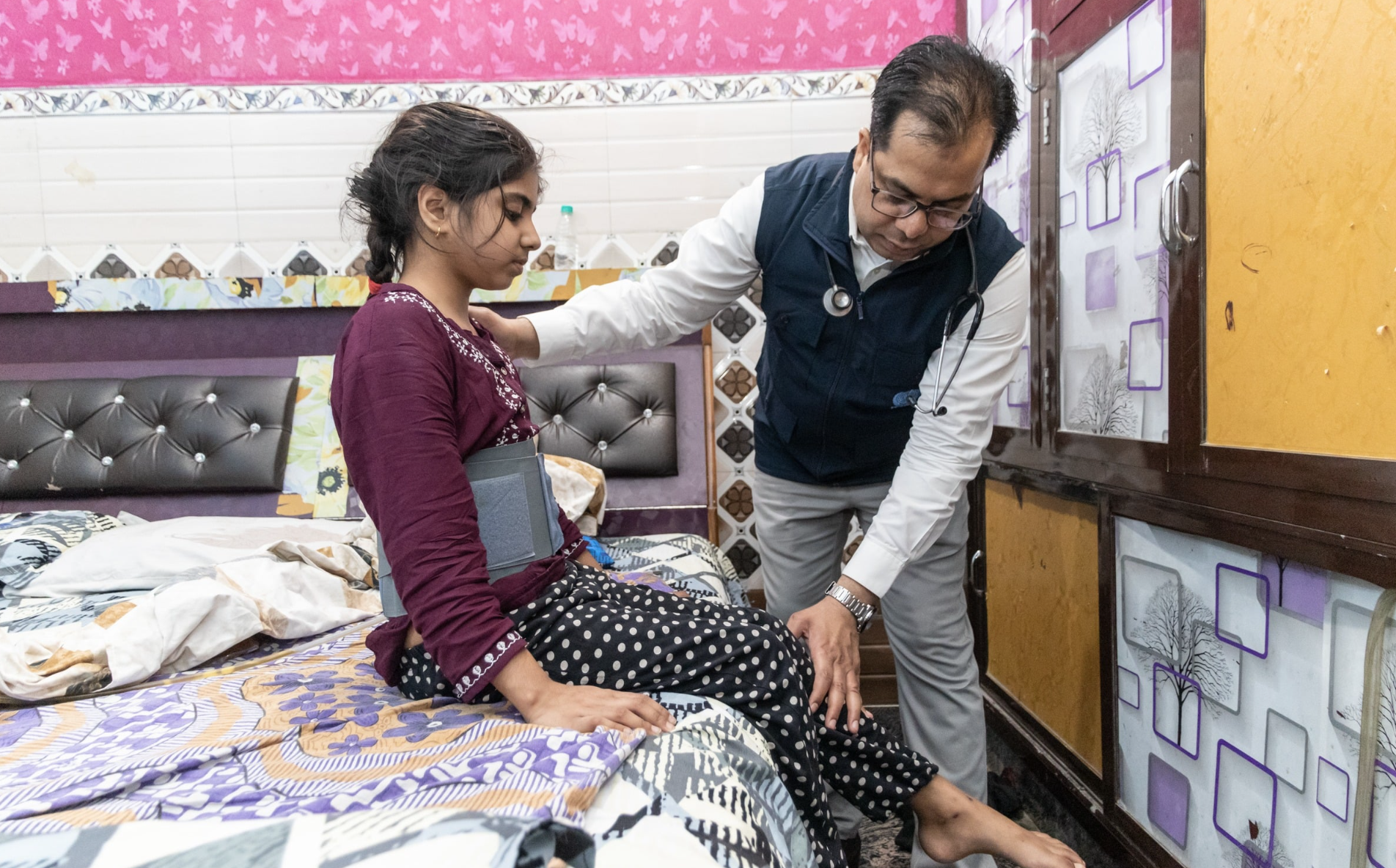
For Rotary, those words have particular resonance. For almost four decades, Rotary and its partners have been pursuing the goal of a polio-free world. Since the launch of the Global Polio Eradication Initiative in 1988, cases have fallen by 99.9%.
Wild poliovirus remains endemic in just two countries – Afghanistan and Pakistan – which is why World Polio Day on October 24 is not simply a reminder of what has been achieved, but of the work which remains.
Mary belongs to a generation of Britons who do not need to be told what polio can do. She remembers the isolation room, her parents standing on the other side of the glass, being unable to lift her head and the repetitive sound of an iron lung keeping another child alive.
“I know that Rotary has done an amazing job spreading the word around the world,” she says. “It is wonderful to think that in almost all countries polio is extinct. Rotary and its partners have done an amazing job.”
More than 75 years have passed since Mary Berry was taken from her family home in Bath to an isolation hospital. Polio left her with a weaker arm, a damaged hand and curvature of the spine. What it did not do was dictate what followed.
There was Bath and Paris; the cookery magazines and books; decades of television; ‘Bake Off’ and a damehood; and a lifetime spent encouraging other people to cook.
Mary, however, prefers not to dwell on what might have been. “I am very grateful that I have had amazing NHS support throughout my life,” she adds. “It hasn't affected my way of life in any way. I was very fortunate and count my blessings.”